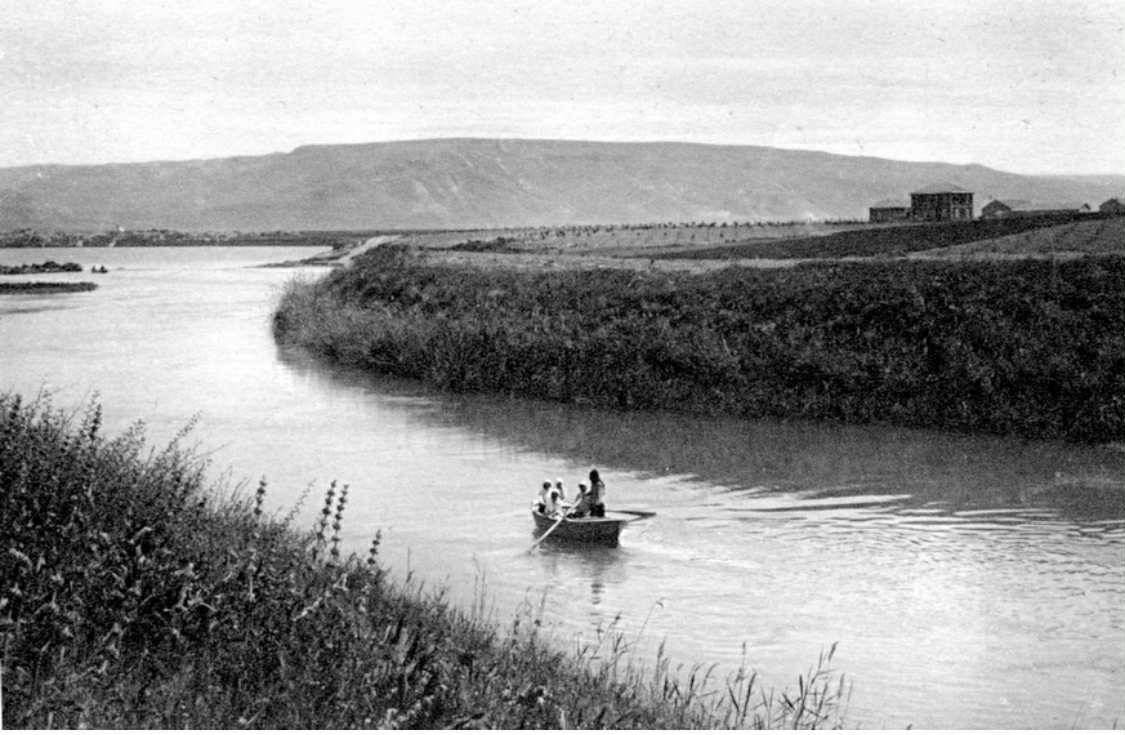
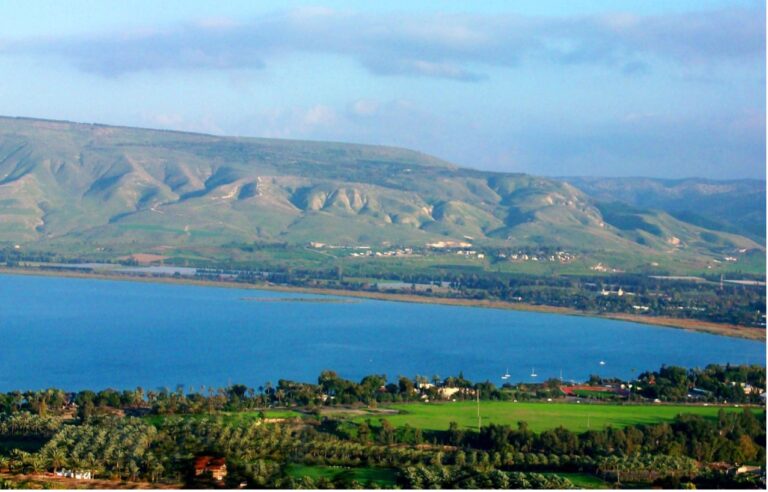
Anovia– Lake Tiberias, the lowest freshwater lake on the planet and the second-lowest body of water in the world after the Dead Sea, lies in the northeastern part of occupied Palestine, at the meeting point of the borders of three countries: Jordan, Syria, and Palestine.
Over the decades, it has gained notable geopolitical importance, serving as a major source of freshwater in a highly sensitive region, a reality that has made it a constant focal point of regional tensions and disputes amid shifting political and security conditions.
The largest freshwater lake in the area stretches more than 21 kilometers from north to south, with a depth reaching approximately 43 meters. It is partially fed by underground springs located in the Jordanian section of the Great Rift Valley, while the Jordan River forms its main water artery.
The lake is distinguished by its rich diversity of marine organisms and zooplankton, including aquatic crustaceans, mollusks, and microscopic algae, and it is known for producing a wide variety of crops such as dates, citrus fruits, and vegetables.
Throughout history, the lake has carried several names: from Gennesaret, Kinnereth, and Chinneroth to the “Sea of Galilee” in the Bible. Lake Tiberias is mentioned in the Christian Gospels and became a destination for pilgrims.
It was also linked to the Roman Emperor Tiberius, whose name it bears today.
The natural landscape surrounding the lake enhances its uniqueness. Its winter climate is relatively mild due to its extreme depression below sea level, with December temperatures averaging around 14°C. Rain falls in short, intense showers over a span of only about fifty days. Summers, by contrast, are hot, with temperatures reaching 31°C, conditions that have long supported fertile agricultural activity, including the cultivation of bananas, dates, citrus fruits, and vegetables.
On the western shore of the lake, at 682 feet below sea level, the city of Tiberias was established in 26 BCE by order of Herod, who adorned it with palaces, temples, theaters, and public baths built above the hot springs renowned throughout the Roman world for their therapeutic properties.
The historian Josephus described the site as “nature’s ambition,” a testament to the beauty of its surroundings.
Tiberias is home to the tombs of prominent historical figures, most notably the famed philosopher and physician Moses Maimonides, the personal doctor of Salah ad-Din al-Ayyubi, who died in Cairo in 1204 and whose remains were transferred to Tiberias.
With its interwoven layers of geography, history, religion, and politics, Lake Tiberias remains one of the most deeply rooted sites in the region’s collective memory, a center for research and study, and a landscape that continues to hold the many narratives of an East still rewriting its history today.
Facts about the lake:
Recent geological studies indicate that the water level of Lake Tiberias has changed significantly since the last Ice Age, when it was deeper and more expansive due to a wetter climate and lower temperatures. This has been documented through deep sediment analysis.
In 2013, archaeologists using sonar discovered a massive circular stone structure at the bottom of the lake, closely resembling Bronze Age constructions. It measures 70 meters in diameter and weighs several million kilograms, and its purpose remains a mystery.
Remains of prehistoric human settlements have been uncovered near the lake, including the “Ohalo II” site, which dates back 23,000 years and contains traces of huts, fishing tools, and even early forms of bread.
The hot springs surrounding the lake were an international destination for healing; the Romans built baths there that rivaled the famous Bath complex in Britain, and inscriptions indicate visitors arrived from Asia Minor and Cyprus.
Refrences:
Stanford Lake Lisan Project
Live Science – Mysterious Monument in the Sea of Galilee
Geological Society of America Bulletin
Geological Society of America Bulletin