
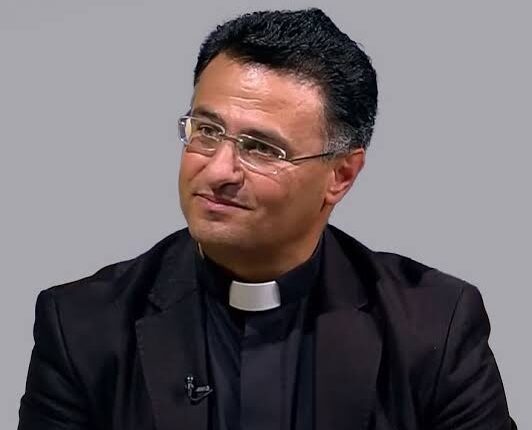
By: Rev. Samer Azar
Introduction: The Geography of the Holy Land as the Fifth Gospel
The Holy Land in Jordan and Palestine is not merely a geographical space or a collection of archaeological sites belonging to the past; rather, it is a living geography upon which decisive events in the history of salvation unfolded. On this land, Jesus Christ walked, taught, performed miracles, suffered, died, and rose again. From here, the message of the Gospel spread to the entire world.
Religious tourism to this part of the world is not simply a cultural activity, but a living spiritual and intellectual pilgrimage. It connects visitors to the roots of faith, allowing them to walk in the footsteps of Christ, to experience the events that shaped the history of salvation, and to realize that the Gospel is not merely a written text, but a reality embodied in this land.
The sixth-century Madaba Mosaic Map bears witness to this profound connection between text and geography. It preserves the oldest Christian representation of the holy places, affirming that Jordan and Palestine together formed an inseparable geographical and spiritual unity—the very stage upon which the events of the Gospel took place. Every mountain, river, and city carries the memory of Christ’s miracles and teachings.
Thus, pilgrimage to this Holy Land is not merely a recollection of history, but a living proclamation that the message of Christ remains present and active, and that this land continues to be the cradle of Christianity from which the message of love and peace was sent forth to the world.
Palestine: Four Central Stations in the Life of Jesus Christ
• The Church of the Annunciation – Nazareth
In Nazareth, the journey of salvation began when the Virgin Mary received the angel’s announcement of the incarnation of the Word of God. In this place, human freedom met divine will, and the response that changed the course of history was spoken: “Let it be to me according to your word.”
The Church of the Annunciation, built over the traditional site of Mary’s home, is not merely an architectural monument, but a spiritual space where the beginning of the divine mystery becomes tangible—where faith became an event in a specific time and place.
• The Church of the Nativity – Bethlehem
In Bethlehem, Jesus Christ was born incarnate, fulfilling the prophecies and proclaiming that God chooses simplicity and humility as the gateway to salvation. The Church of the Nativity, one of the oldest continuously functioning churches in the world, stands as a witness to the continuity of faith throughout the ages.
Visiting the Grotto of the Nativity is an encounter with a divine mystery that entered history from the margins, transforming them into the center of salvation, and affirming that the greatness of the message is measured not by appearances, but by the depth of love.
• The Church of the Holy Sepulchre – Jerusalem
The Church of the Holy Sepulchre represents the heart and soul of Christian geography, embracing the sites of crucifixion, burial, and resurrection. In Jerusalem, the mystery of redemption reached its climax, where the cross was transformed from an instrument of death into a sign of life, and from suffering was born hope.
Visiting this site is not merely a physical journey, but a standing before the very event upon which Christian faith is founded—a message that continues to radiate from this land to the entire world.
• The Church of the Beatitudes – Mount of Beatitudes
On the hillside overlooking the Sea of Galilee, Jesus delivered the Sermon on the Mount, proclaiming the Beatitudes that form the essence of his teaching, the foundation of his mission, and the constitution of the Kingdom of Heaven. Here, prevailing values were overturned, and the poor in spirit, the peacemakers, and those who hunger for righteousness became central to the divine promise.
The Mount of Beatitudes is not merely a beautiful natural site, but a profound spiritual and educational space where pilgrims encounter the words of Christ directly, in the place where they were first spoken. Here, Christianity is revealed as a way of life and ethics, not merely rituals, and geography and message become one.
Jordan: Four Significant Biblical Sites
• The Baptism Site (Al-Maghtas) – The Beginning of Christ’s Public Ministry
On the eastern bank of the Jordan River, at the Baptism Site, history witnessed the baptism of Jesus Christ by John the Baptist. In this place, Jesus began his public ministry, and his identity and mission were revealed to the world.
Visiting the Baptism Site is a unique spiritual experience that restores to the pilgrim the meaning of new birth, passage, and renewal in Christ, at the very place where the journey began.
• Mount Nebo – The Horizon of Promise and Hope
From Mount Nebo, where the prophet Moses looked upon the land in which the divine promise would be fulfilled, the memory of the Old Testament intersects with the fulfillment of the promise in the New Testament. This site carries deep symbolic meaning, reminding us that the project of salvation is a continuous journey that reached its fullness in the person of Christ.
Standing on Mount Nebo is an invitation to contemplate faith as a journey, and hope as something that transcends geography and time.
• Gadara (Umm Qais) – The Opening of the Message to the Nations
In the region of Gadara, part of the Decapolis, Christ demonstrated his authority over the forces of evil, declaring that his message was not confined to one people or place. The ruins of Umm Qais testify to the early openness of the Gospel to the Hellenistic world and to the universality of the Christian message from its very beginnings.
Visiting this site is a reminder that Christianity was born open to the other, carrying a message of liberation and hope.
• Machaerus – The Voice of Witness and Truth
The site of Machaerus is associated with the martyrdom of John the Baptist for his courage and his commitment to truth. As the forerunner who prepared the way for Christ, his witness reminds us that the path of the Gospel was not paved with comfort, but with testimony and steadfastness.
Visiting this site confronts the pilgrim with questions of commitment and responsibility, linking the message of John with the message of Christ in the call to repentance and to living according to the law of love.
Conclusion: A Pilgrimage to the Roots and a Launch Toward the World
Visiting the holy sites in Jordan and Palestine is not merely a historical journey, but a living spiritual experience that connects visitors to the roots of faith and allows them to walk in the footsteps of Jesus Christ in the places where he was born, lived, and proclaimed the message of love and peace.
Here, where Christianity was born and its message was launched to the world, visitors find themselves before an opportunity to renew their faith and to engage in deep reflection on the meanings of love, humility, and hope. They come to understand that the Gospel is not merely a text to be read, but a living reality embodied in land and people.Pilgrimage to this Holy Land is an invitation to encounter history and meaning, and to live the message of Christ in daily life, so that every visitor and pilgrim may become a living witness to the Christian message that changed the face of the world. Jordan and Palestine remain the cradle of faith and the source of a universal message of hope, love, and peace.