Anovia– There are places that preserve history, and others that interpret it, and Umm Qais belongs to the latter.
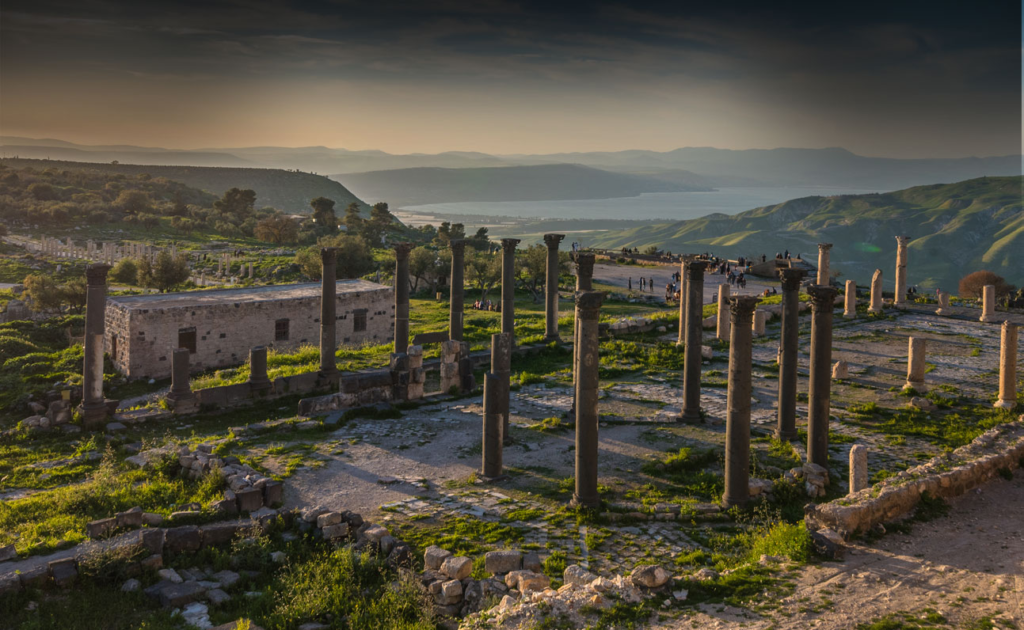
At the northern edge of Jordan, the ancient city of Gadara Umm Qais (Gadara) overlooks a wide geographical expanse, with position that offers a clear view across valleys that historically connected regions, routes, and populations. This vantage point provides more than a physical outlook; it reflects the site’s long-standing role within broader historical movement and exchange.
International research indicates that Umm Qais was strategically positioned along routes linking the Levant with the Mediterranean. The elevated plateau allowed for visibility and connectivity, reinforcing its role within regional networks.
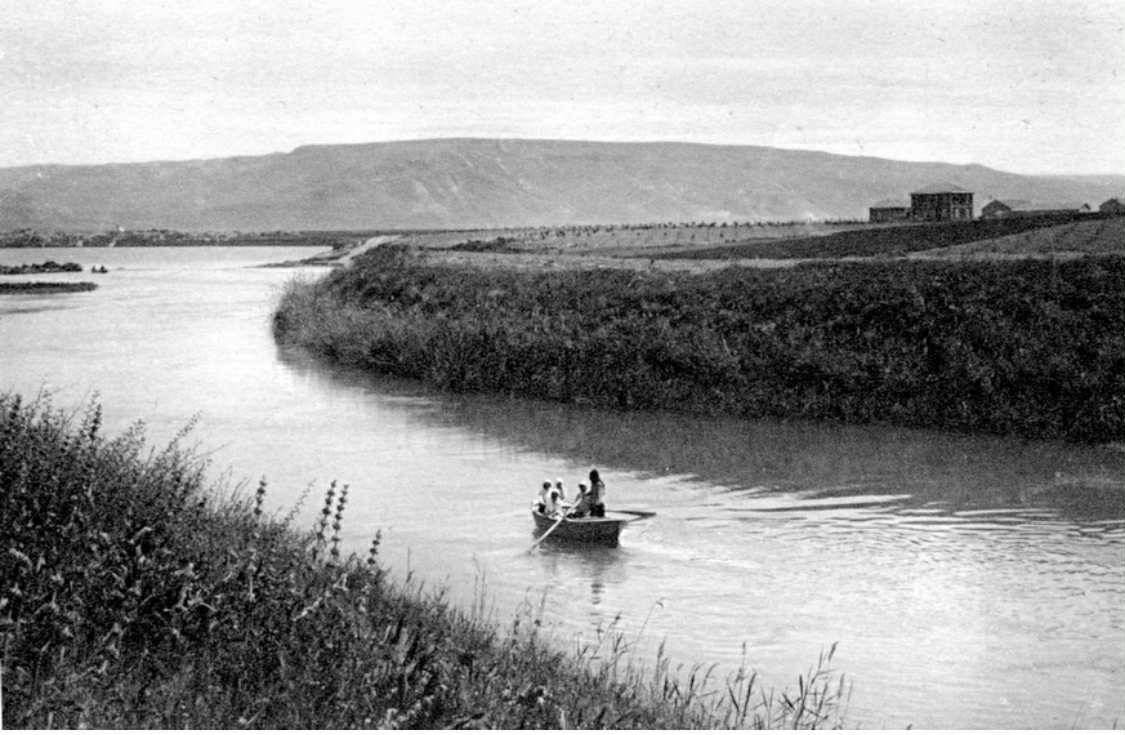
From Umm Qais, the surrounding landscape illustrates patterns of movement and interaction over time.
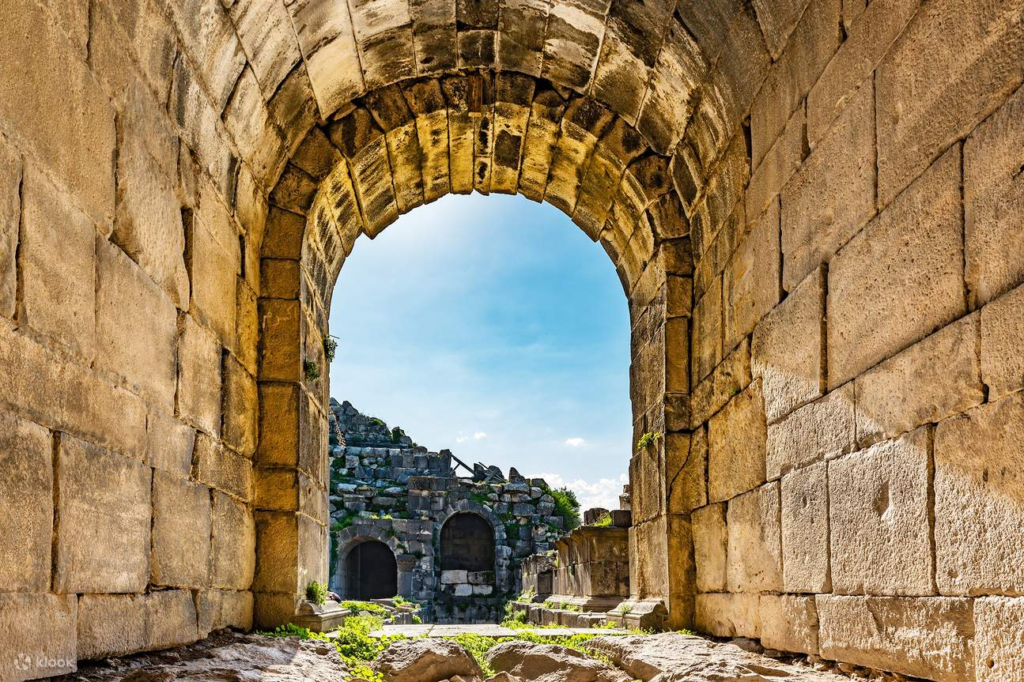
The place was also recognized in antiquity as a center of intellectual activity. Historical sources refer to it as a city associated with philosophers, rhetoricians, and poets whose influence extended beyond the region.
Today, this legacy is reflected in the structure of the site, where urban planning and spatial organization suggest continuity in function and identity.
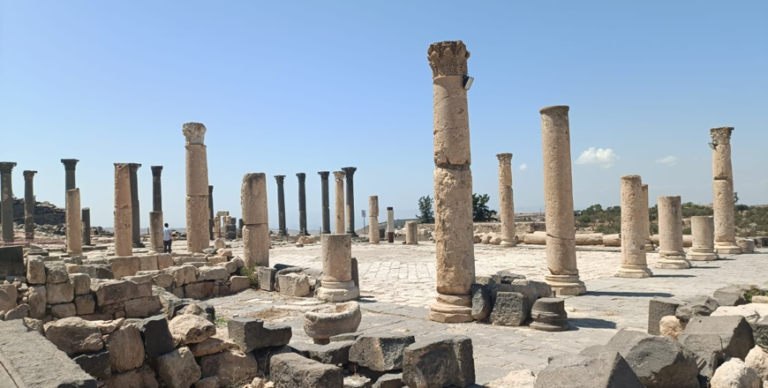
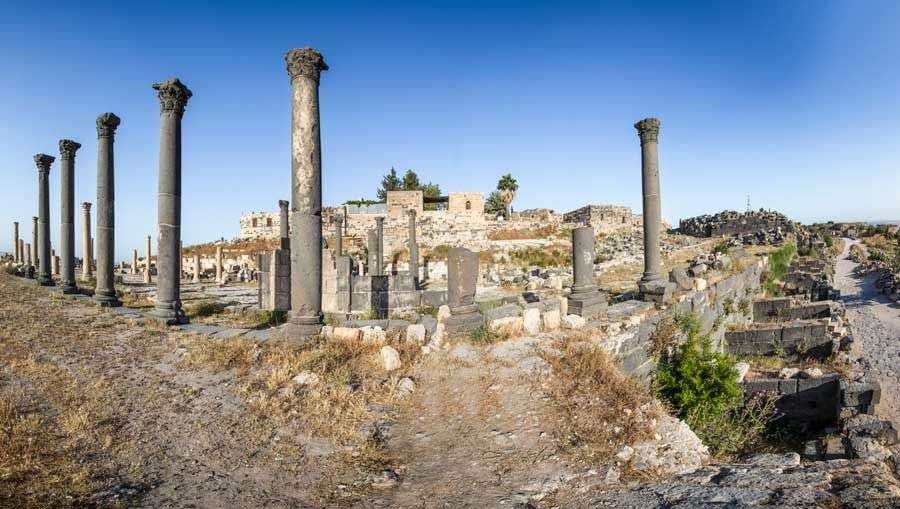
The architecture reflects this layered history; the use of black basalt alongside white limestone creates a distinct visual contrast. Archaeological studies, including European missions, confirm that the site developed over multiple periods. Roman urban design was built upon earlier Hellenistic foundations, while Byzantine and early Islamic phases introduced further modifications. Umm Qais represents successive adaptations rather than a single historical moment.
Subsurface studies reveal additional complexity. International research teams have documented an advanced hydraulic system consisting of tunnels, reservoirs, and channels. This infrastructure reflects an organized response to environmental conditions, demonstrating long-term resource management within a semi-arid landscape.
Material analysis further situates Gadara within regional trade networks. The presence of imported materials, including marble, indicates connections with Mediterranean markets. These findings position the city as an active participant in exchange systems, rather than an isolated settlement.
Unlike many archaeological sites, Umm Qais remains connected to its surrounding environment. Current research approaches increasingly frame it as a living landscape, where historical layers coexist with contemporary use. This continuity contributes to the site’s relevance beyond its archaeological value.
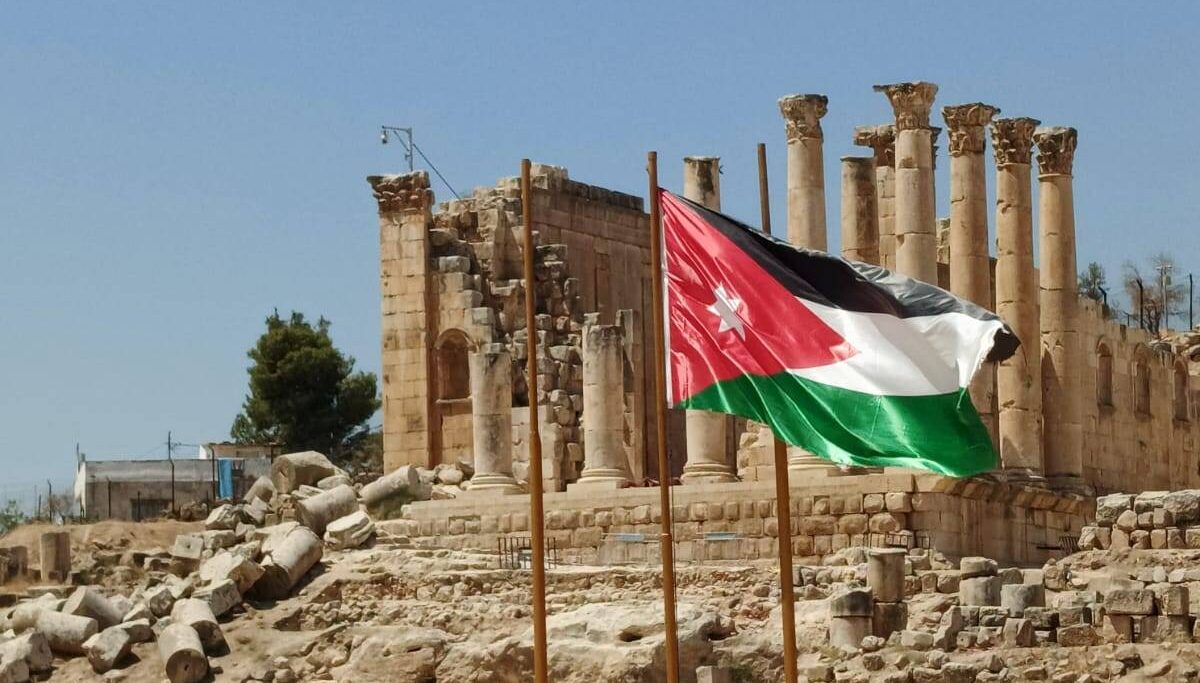
Within this context, the role of Jordan is defined through preservation and management. Umm Qais is maintained as a cultural and historical site, reflecting an approach that emphasizes conservation while enabling access. This positions the country within broader efforts to safeguard shared heritage.
The visitor experience is defined by clarity and openness. The site’s layout, combined with its natural setting, allows for direct engagement without extensive mediation. The emphasis remains on observation and understanding rather than presentation.Umm Qais illustrates how historical sites function within wider narratives. It reflects continuity, adaptation, and interaction across time. Rather than representing a fixed past, it demonstrates how history is structured through interpretation and preservation.