Anovia – Strategically positioned midway between Amman and Petra, Karak stands as one of southern Jordan’s most significant historic cities. Its identity is inseparable from the commanding Crusader-Islamic fortress that rises above it; one of the most remarkably preserved strongholds in the region, whose origins trace back to the era of the First Crusades.
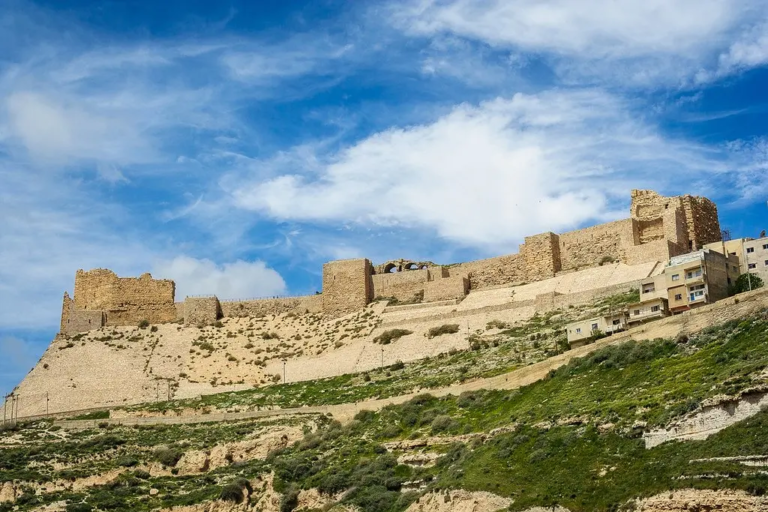
Perched on a dramatic triangular plateau nearly 900 meters above sea level, the town retains much of its old-world character. Its historic heart remains enclosed within the original Crusader walls, crowned by the imposing castle that dominates the plateau’s narrow southern edge and overlooks the vast valleys below.
The ancient Crusader Castle of Karak, later transformed by the Mamluks, stands as a powerful beacon of Jordan’s layered history. Built in 1142 under Pagan the Butler and King Fulk of Jerusalem, the fortress was engineered to control the Transjordan region through its massive stone walls, intricate tunnels, and elevated, strategic position. It gained notoriety under Raynald of Châtillon, whose provocative raids on trade caravans and threats against Mecca provoked the fury of Saladin. The resulting confrontations, culminating in the famous siege of 1188 and the fortress’s fall to the Ayyubids, cemented Karak’s place in medieval history.
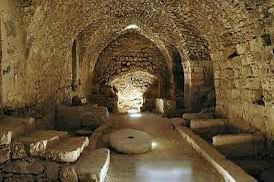
With the rise of the Mamluks, the castle entered a new architectural and political chapter. Under the leadership of Sultan Baibars in 1264, the fortress underwent extensive reconstruction that strengthened its defensive capacity. Reinforced towers, rebuilt walls, and the construction of the northern keep elevated Karak into a formidable administrative center and military powerhouse. These layered expansions reveal the fortress not only as a battlefield relic but as a dynamic structure shaped by shifting empires.
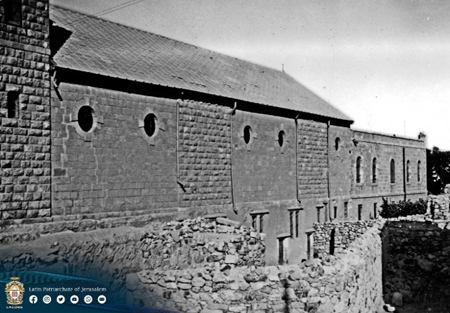
Karak Castle itself is organized into two principal defensive levels separated by a massive inner wall. The upper court contains the most significant structures, including a Crusader church, the Mamluk keep, a palace complex, and a mosque, each building standing as a trace of the city’s political, cultural, and religious evolution. Below it lies the lower bailey, lined with long underground galleries and vaulted passageways where storage, stables, and defensive operations once sustained the medieval garrison. These subterranean spaces remain among the most evocative features of the fortress, preserving the rhythm of daily life within its walls.
Key architectural techniques include:
- Fortifications: Thick volcanic-stone walls reinforced by rectangular towers, deep ditches (one doubling as a cistern), and a defensive glacis.
- Stonework: A combination of Crusader masonry—featuring draft stones with smooth edges and rough centers—and later Mamluk limestone restorations.
- Interior Layout: Seven interconnected tiers of halls, chambers, galleries, and open courtyards reflecting both Crusader austerity and Mamluk administrative sophistication.
- Mamluk Enhancements: Baibars’ keep, with walls measuring 6.5 meters thick, arrow slits, and the elegant Mamluk palace with its open-air reception space and mosque.
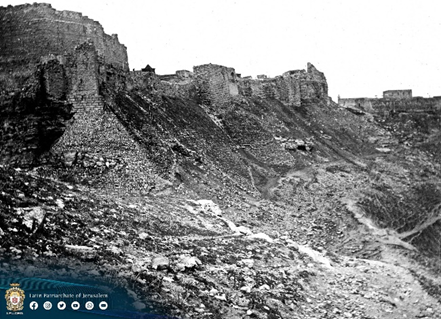
The castle’s exterior fortifications amplify its architectural grandeur. The northern front is anchored by two massive corner towers, while the eastern side is strengthened by four towers built above a steep limestone glacis, the sloping wall designed to hinder invaders and protect the fortress’s foundations from siege engines. As a spur castle, Karak maximizes the natural topography of its hilltop, with steep drops on three sides forcing attackers to approach from a single exposed front. Its thick volcanic-stone walls, deep defensive ditches, and draft-masonry stonework showcase the sophisticated engineering of the Crusader period, later complemented by the refined craftsmanship of Mamluk additions such as Baibars’ keep, with its 6.5-meter-thick walls and finely carved arrow slits.
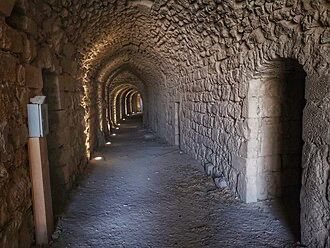
Unlike the more compact Ajlun Castle or the partially ruined Shobak fortress, Karak Castle sprawls across seven interconnected levels, offering an unmatched maze of vaulted halls, kitchens, stables, dungeons, a Crusader chapel, open courtyards, and hidden passageways like the Crusader Gallery and Rosette Gallery. On clear days, the fortress rewards visitors with sweeping views stretching toward the Dead Sea and across the rugged valleys of the surrounding highlands—vistas once used by medieval guards to survey approaching armies.
Nestled within the lower court lies the Karak Archaeological Museum, inaugurated in 2004, which presents a curated journey through the region’s history, from prehistory to the Islamic era. Its artifacts and inscriptions contextualize the deep cultural significance of Karak, reminding visitors that this castle is not an isolated relic but a chapter in a much broader narrative of Jordan’s heritage.
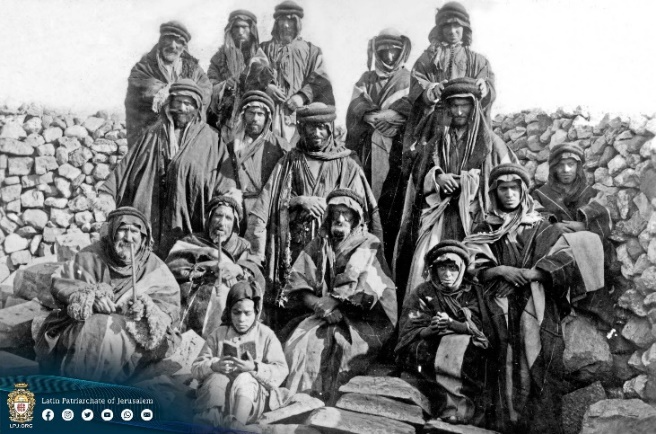
While Karak Castle once stood as a bulwark defending the Latin Kingdom of Jerusalem’s holdings, today it welcomes travelers seeking history, architecture, and panorama. Many encounter it while traveling along the ancient King’s Highway, yet its enduring grandeur and richly layered stories make it a destination that stands firmly on its own—a place where the echoes of medieval conflicts, cultural exchanges, and architectural mastery continue to shape the present.
References
Kennedy, Hugh. Crusader Castles. Cambridge University Press, 1994.
Pringle, Denys. The Churches of the Crusader Kingdom of Jerusalem. Oxford University Press, 1998.
Brown, R. Castles of the Holy Land. Thames & Hudson, 1989.
Jordan Ministry of Tourism & Antiquities – Karak Castle Archives.
Karak Archaeological Museum Publication (2004).