New pilgrimage trail traces route of 4th-century Christian woman visiting the Holy Lands, offering a contemplative hike for Jordanians and tourists alike.
*By Heather M. Surls
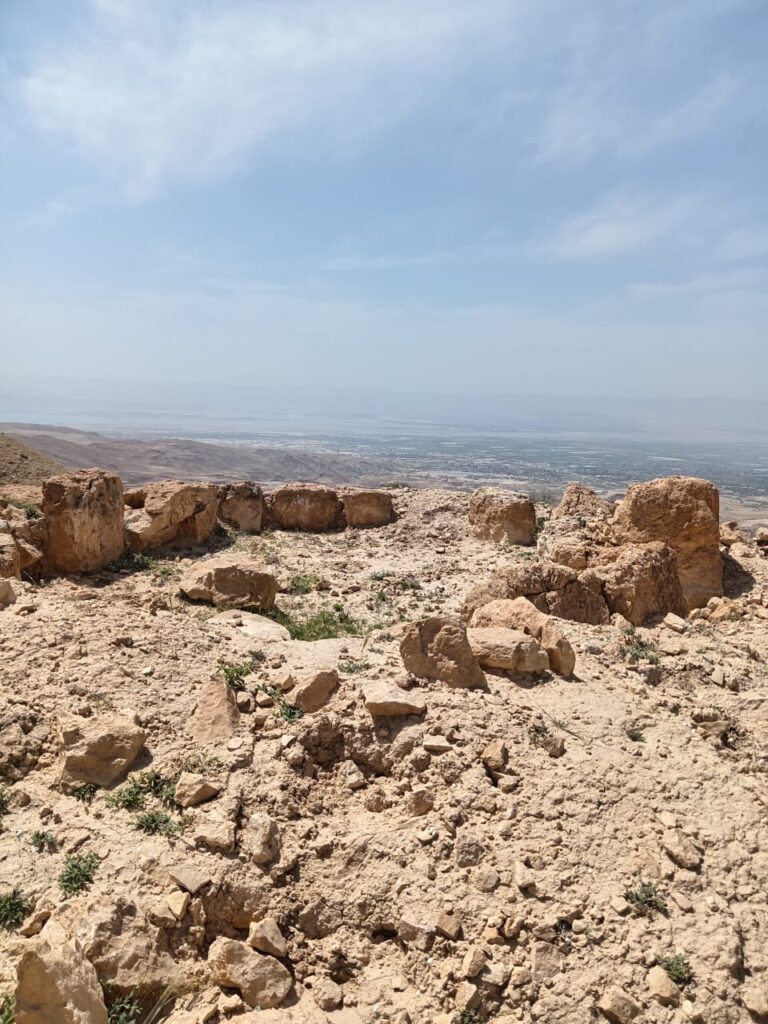
After Oscar Koshebye parked at the entrance gate to Mount Nebo, he, my friend, and I climbed out of the car and slung on our backpacks. The April morning was clear. After heavy seasonal rains, the mountains and valleys around us were thick with vegetation and sprinkled with wildflowers.
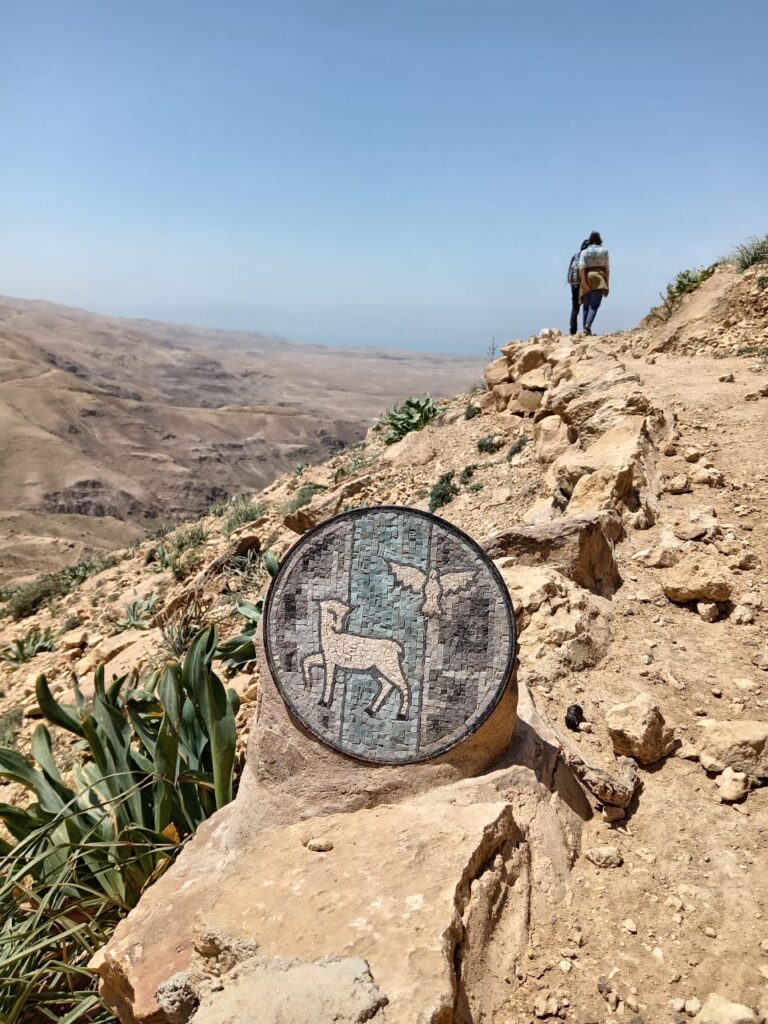
We planned to walk the first leg of the Egeria Way—a two-day, 40-kilometer pilgrimage trail tracing the path of a Byzantine Christian woman from Spain’s Galicia region who visited the Holy Lands in the late 4th century. Oscar, a Circassian-background Jordanian Muslim, spent much of his life in Spain, where he hiked the 800-kilometer Camino de Santiago. After returning to Jordan in 2018, he was introduced to Egeria by his father, who gave him a copy of her Diary of a Pilgrimage, one of the oldest-known records of Christian pilgrimage.
“Fascinated by her journal, I envisioned a modern walking route that would follow Egeria’s ancient footsteps, stretching from Jordan to Jerusalem,” said Koshebye. “ I saw this trail not just as a physical hike, but as a practical tool for intercultural dialogue and interreligious understanding.”
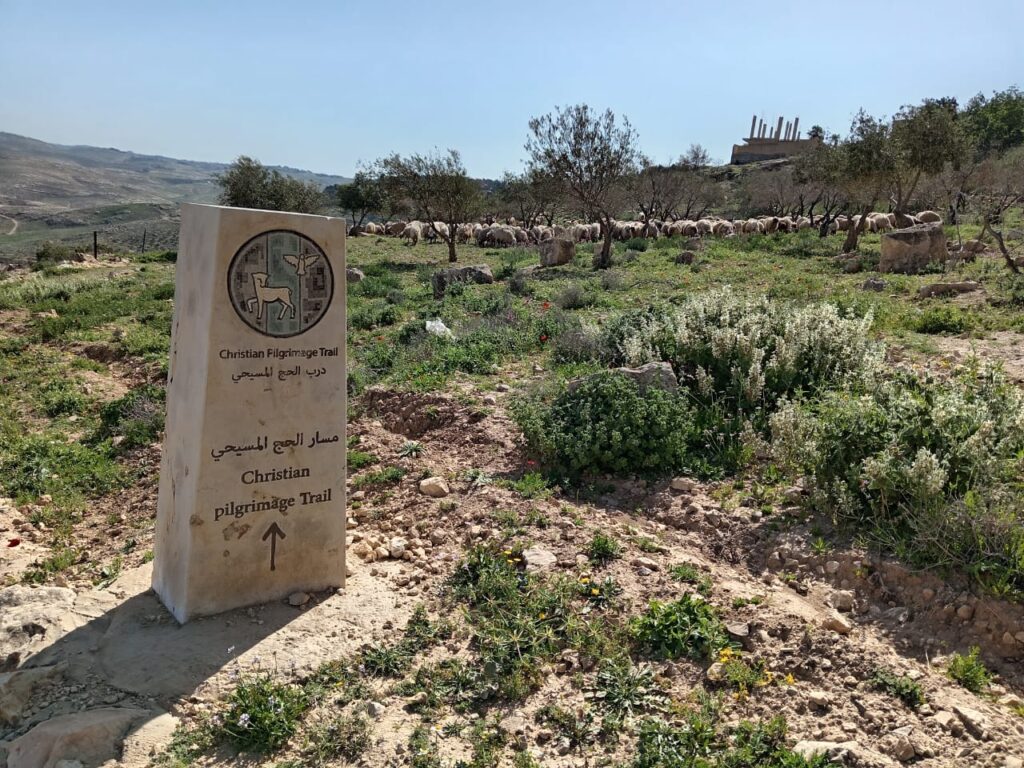
Relying on Egeria’s writings, Koshebye drew the path from Mt. Nebo down to Tel Al-Hamman and then to the Baptism Site. The Jordan Tourism Board officially opened the Egeria Way in 2025 after investing 1 million JD in trail construction. Shortly after its launch, the Egeria Way was formally twinned with the Camino de Santiago, strengthening tourism ties between Jordan and Spain.
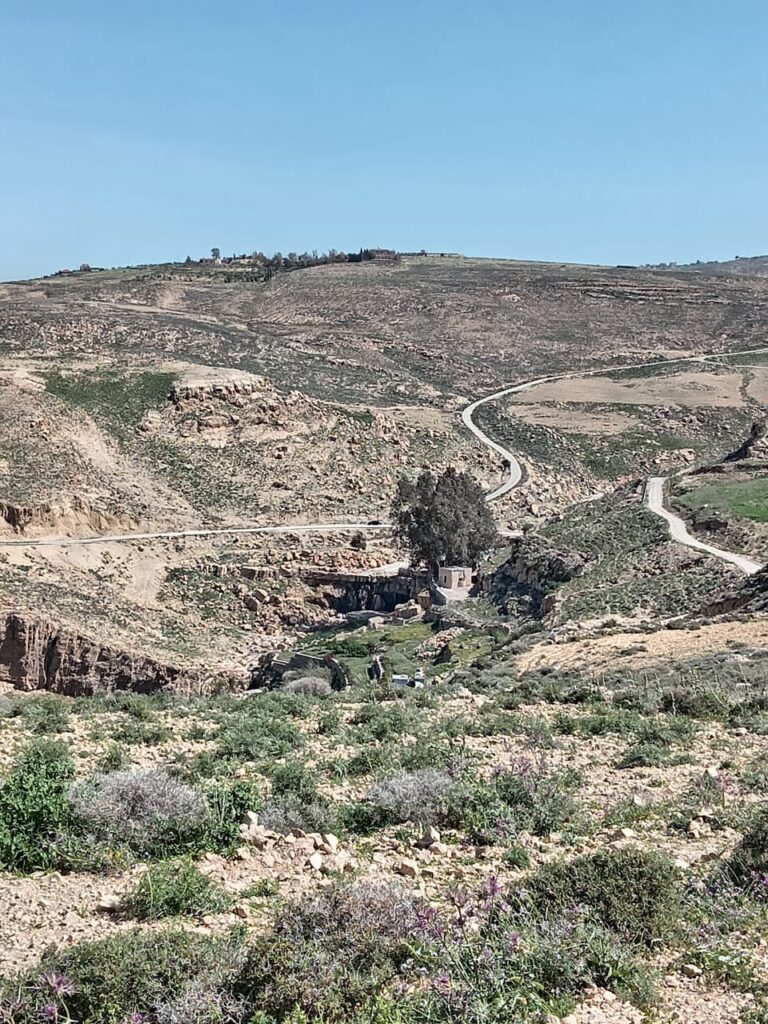
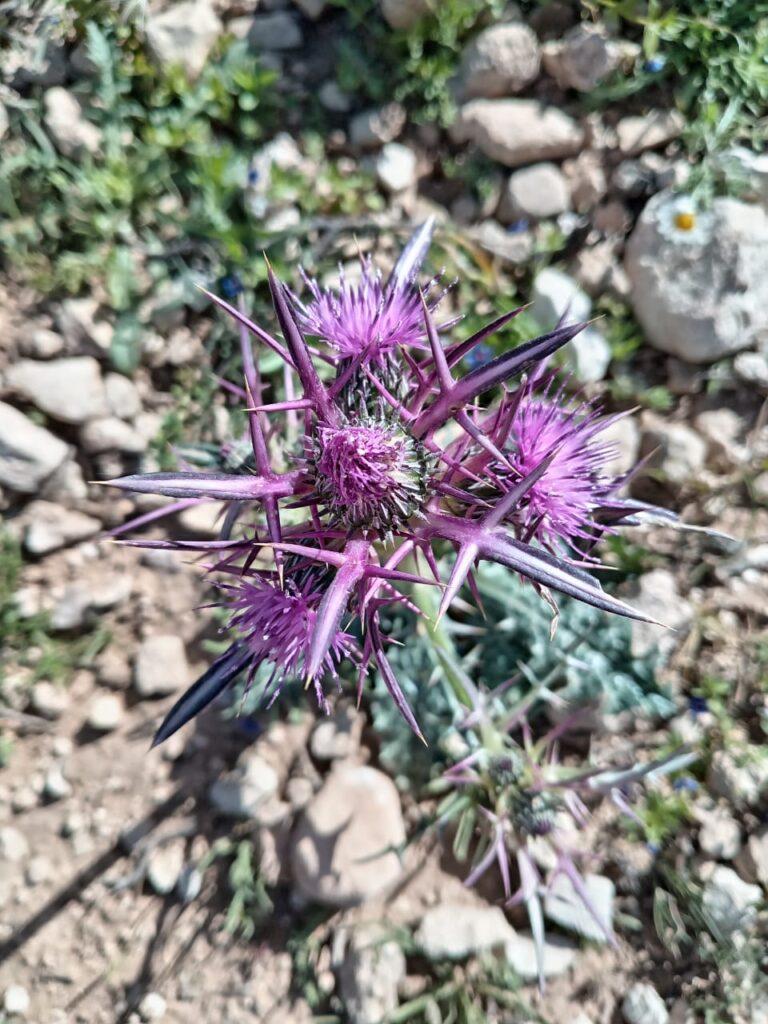
The day we hiked, our little group descended the side of Mount Nebo, angling toward a clump of eucalyptus trees marking Moses’ Springs. I photographed purple thistles bursting like fireworks, their hue matching the smoky purple of iron-infused rock in the distant cliffs. At the springs we tasted the water and admired the maidenhair ferns before climbing up the next mountain. All along the way Oscar described biblical stories and his vision for the trail as a place of interfaith dialogue and peaceful coexistence.
In two adobe-like prayer rooms built along our route, we paused to rest. I opened my phone to read first a portion of Deuteronomy and then Psalm 84, a poem about pilgrimage. I was modeling Egeria—in her detailed account of her journeys beyond Jerusalem, this intrepid traveler regularly stopped to pray, sing a Psalm, and read the biblical account of whatever site she was visiting.

Our walk took us through barley fields where larks sang, past ruins of a church, a pilgrim resthouse, and crumbling Roman watchtowers. As kilometers passed, the terrain transitioned from fertile open spaces to rugged, mineral-streaked rocks of orange, purple, and red. Patches of hardy desert flowers became a respite for my burning eyes.
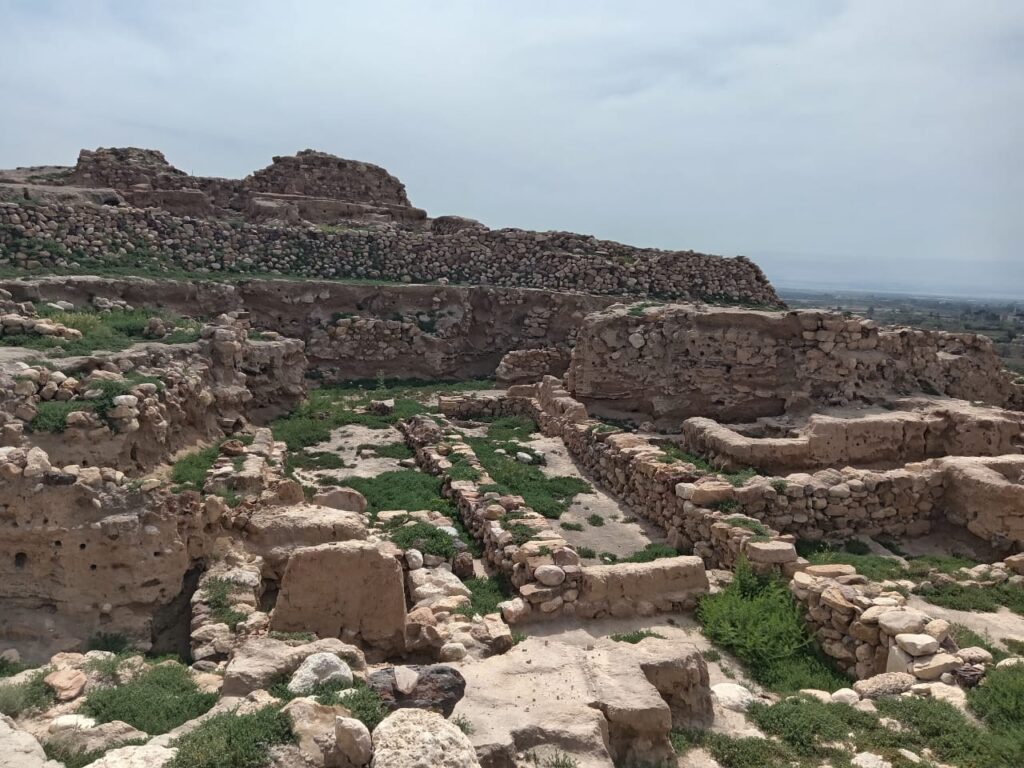
Near the modern town of Al-Ramah, a friend of Oscar’s picked us up and delivered us by Jeep to Tel Al-Hamman. On top of the massive archaeological site, with millennia-old mud bricks still defined, we looked back to see Mount Nebo’s limestone church on the heights above us. Around us were corn fields and farms through which the Egeria Way continues on its second day to the Maghtas, where already Jordan is preparing to commemorate the 2,000-year anniversary of Christ’s baptism.
“By [2030], the project aims to transform this Camino into an enduring pathway of tolerance between religions and love between cultures,” Koshebye shared. “It serves as a reminder that here, where the faith began, the core message remains universal: God is love.”
*Heather Surls is an American creative writer and journalist, author of Beyond the Jordan, a memoir-in-essays describing a decade lived in Jordan and the Holy Land.