
By Rula Samain
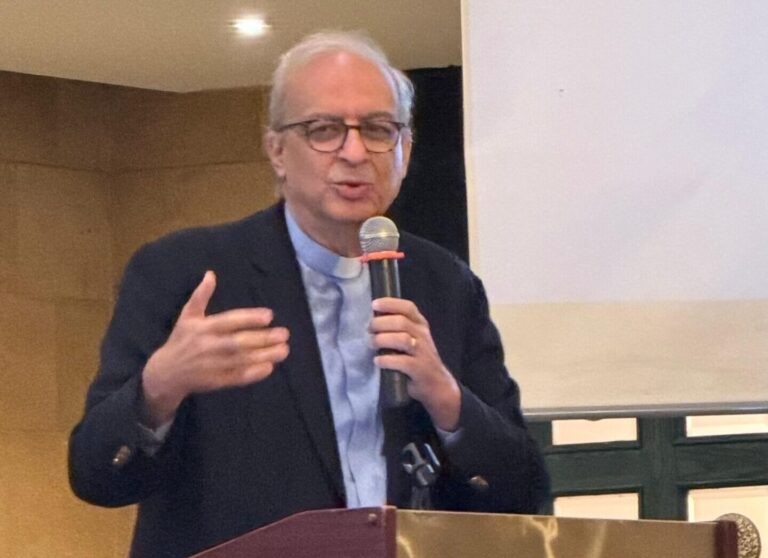
Anovia, Amman – For Rev. Dr. Botros Mansour, Secretary General of the Evangelical World Alliance, Jordan is far more than a destination on a biblical map, rather a place where faith, history, and living Christian witness converge in a landscape that continues to speak to believers from around the world.
Mansour, the first Palestinian Arab from Nazareth to assume the position of Secretary General of the Evangelical World Alliance, an organization representing approximately 560 million Evangelical Christians worldwide, visited Jordan at the end of May, and during an exclusive interview with Anovia Magazine, he spoke passionately about the Kingdom’s unique role in global Christian pilgrimage and its untapped potential as one of the world’s foremost faith tourism destinations.
Mansour’s connection to Jordan is both personal and enduring.
“Jordan has a special place in my heart and life,” he said, “I have come to Jordan so many times I have lost count, both as a tourist, connected to fellow Christians, and also as a relative.”
He noted that he and his wife Abeer frequently visit the Kingdom for rest and fellowship, while family ties further strengthen that bond through his sister Samar, who is married to a Jordanian from the Samawi family.
Yet beyond personal affection lies a deeper conviction that Jordan occupies a unique place within the Christian story.
According to Mansour, Jordan’s significance extends far beyond individual holy sites.
“Jordan sits at the crossroads of biblical memory and living faith,” he said, adding that “it is not merely a scenic backdrop for sacred narratives but a living geography where Scripture can be touched, traced, and contemplated.”
In his view, the Kingdom represents an interconnected biblical landscape where believers can experience the stories of Scripture as part of one continuous spiritual journey stretching from the Old Testament to the early Church.
From the Baptism Site at Bethany Beyond the Jordan, where Jesus was baptized by John the Baptist, to Mount Nebo, where Moses viewed the Promised Land, Jordan offers pilgrims an opportunity to walk through pivotal moments of salvation history.
He points to Umm Qais, ancient Gadara overlooking the Sea of Galilee, as a reminder that biblical events unfolded across a connected regional landscape rather than within isolated locations, and likewise, Pella, one of the Decapolis cities, that stands as an enduring witness to the early Christian community and its resilience during periods of persecution.
For Mansour, Jordan’s biblical significance is not confined to the New Testament, but encompasses a much broader narrative stretching from the Old Testament through the early Church and beyond.
“The stories of Moses, Elijah, John the Baptist, the cities of refuge, and the early Christian communities are all woven into Jordan’s landscape,” he said.
“This creates an extraordinary spiritual journey for pilgrims seeking to deepen their understanding of Scripture.”
While Jordan’s archaeological treasures continue to attract international visitors, Mansour believes the country’s greatest asset lies not only in its sacred sites but also in its living Christian communities.
“Despite their relatively small numbers, Jordanian Christians are an important and integral part of the country’s foundation and remain a key pillar of modern Jordan,” he said.
He argues that pilgrimage should not be limited to visiting archaeological landmarks.
“It is important that visitors are not confined to ancient sites alone,” he explained, and continued that “pilgrims should also have opportunities to meet the living stones, the Christians of Jordan who have preserved their faith and presence in this land since the earliest centuries of Christianity.”
Such encounters, he believes, transform religious tourism into a deeper spiritual experience, allowing visitors not only to see where biblical events occurred but also to engage with communities that continue to embody that heritage.
Mansour emphasized that strengthening Christian pilgrimage requires coordinated efforts among tourism authorities, government institutions, churches, and local communities.
“I think cooperation among all relevant tourism agencies and ministries is crucial to the success of a strong incoming tourism sector.”
Religious leaders, he added, also bear responsibility for creating a welcoming environment for pilgrims and ensuring that minor theological differences do not overshadow broader goals.
“The focus should remain on helping pilgrims reconnect with their faith as they walk through biblical sites and encounter fellow believers who have maintained their Christian witness across generations.”
Such an approach, he noted, reflects Jordan’s longstanding reputation as a country of coexistence, hospitality, and religious moderation.
Mansour believes Jordan possesses a tremendous opportunity to engage the global Evangelical community, one of the largest Christian constituencies worldwide.
While acknowledging Jordan’s success in promoting iconic destinations such as Petra, Wadi Rum, and the Dead Sea, he argues that the Kingdom’s faith tourism potential remains underutilized.
“What is needed is a well-planned and well-executed strategy capable of harnessing the enormous potential of Christians around the world.”
He revealed that Evangelical leaders have already expressed their willingness to support Jordan’s efforts during meetings with the Ministry of Tourism and Antiquities earlier this year.
The timing, he noted, could not be more significant.
Jordan is currently approaching major Christian commemorations, including celebrations related to the third millennium of Christ’s baptism and future milestones associated with the spread of Christianity following the death, resurrection, and ascension of Jesus Christ.
“These anniversaries offer an exceptional opportunity to position Jordan more prominently on the global pilgrimage map,” Mansour said.
For Mansour, the Kingdom’s appeal lies in its unique ability to unite archaeology, theology, history, and living faith within one accessible destination.
Its Byzantine mosaics, sacred rivers, ancient churches, and biblical landscapes tell a story that stretches across centuries. Yet equally important are the people who continue to preserve and live that story today, he noted.
Looking ahead, he envisions Jordan not simply as a collection of pilgrimage sites but as a comprehensive spiritual experience capable of inspiring believers from every corner of the globe.
“Jordan is a living catechism of faith. It is a place where the biblical story comes alive, where faith can be renewed, and where pilgrims can encounter both the history of Christianity and the communities that continue to carry that legacy forward.”