
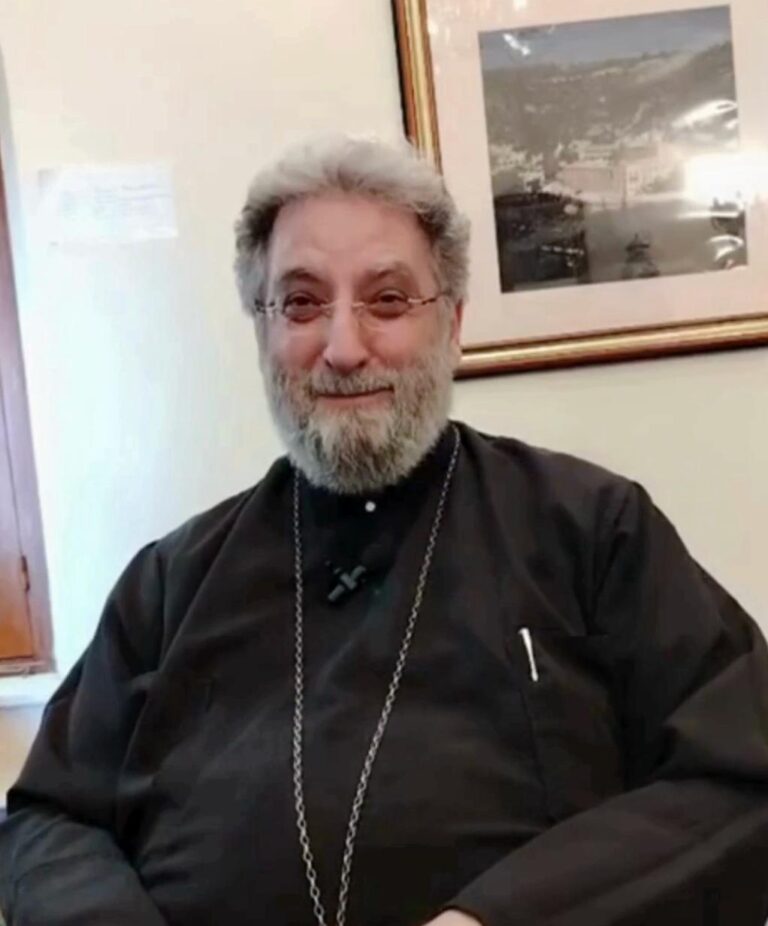
At the Monastery of Saint Neophytos in Paphos, Archimandrite Neophytos reflects on the restless spiritual journey of the monastery’s founder, Cyprus’s centuries-old relationship with the Holy Land, and why Jordan remains deeply present in Orthodox Christian consciousness.
By Rula Samain
Pafos, Anovia- Archimandrite Neophytos, Librarian of the Monastery of Saint Neophytos in Paphos, speaks with the precision of a historian and the perspective of a priest. Widely read, articulate and deeply familiar with the intellectual and spiritual heritage of his monastery, he moves easily between history, theology, monasticism and personal memory, making a conversation about one Cypriot saint gradually become a much larger conversation about pilgrimage, the Holy Land and Jordan.
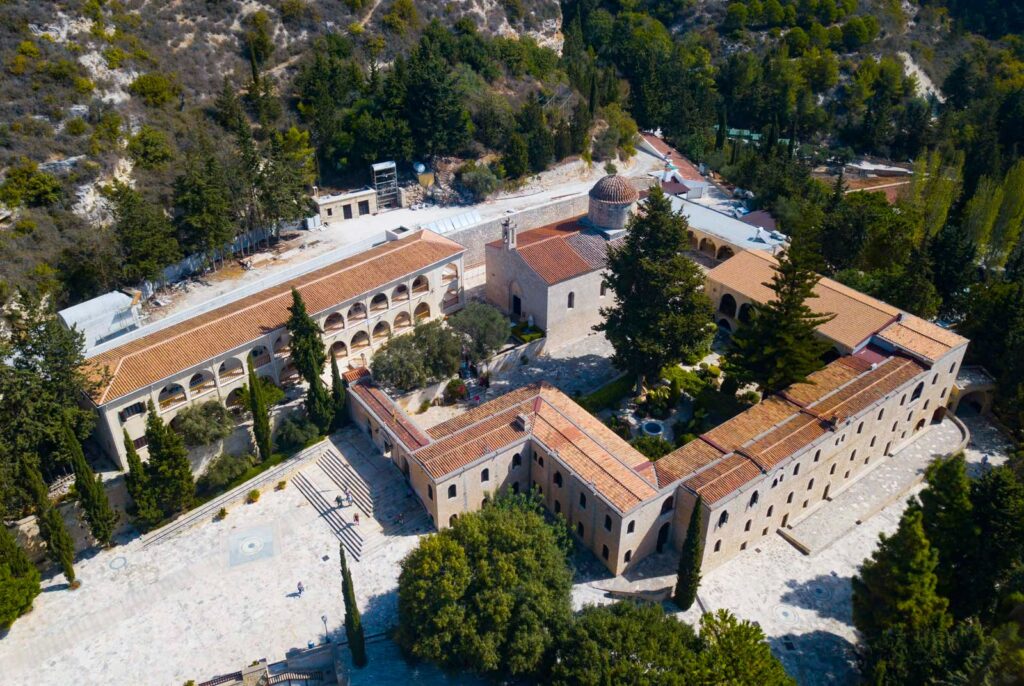
The setting itself makes that connection difficult to ignore. Outside Paphos, among a landscape of rock, hills and silence, stands the monastery founded around the spiritual legacy of Saint Neophytos the Recluse, one of Cyprus’s important medieval monastic figures.
Archimandrite Neophytos told Anovia the complete story.
Born in Lefkara in 1134, Saint Neophytos entered monastic life while still young. Yet ordinary monastic life would not satisfy him since his ambition was more demanding, to simply find solitude, asceticism and what Archimandrite Neophytosdescribes simply as learning “how to live alone with God.”
That search eventually took him to the Holy Land.
“It was not, let us say, a naïve pilgrimage. He (Saint Neophytos) was very precise in his endeavour. He wanted to find a teacher who could teach him how to live alone with God, the hermitic life, thus travelled for approximately six months and encountered monasteries, monks, ascetics and different forms of spiritual life, but he did not find the teacher he had hoped would introduce him to that solitary way of living.”
For the young monk, therefore, pilgrimage was more about search for formation than sacred places.
“It was not a naïve pilgrimage,” the Archimandrite stresses.
That distinction gives the story particular weight today, when pilgrimage is often measured through routes, visitor numbers and tourism products. For Saint Neophytos, however, the journey was about knowledge, discipline and transformation.
The Archimandrite continues, After months in the Holy Land, he remained unsatisfied. He had encountered monasteries, ascetics and remarkable spiritual traditions, but not the teacher he was seeking.
“Stubborn and unsatisfied,” the Archimandrite says with a smile.
According to tradition, a vision eventually revealed that the solitary life Neophytosdesired awaited him elsewhere. He returned to Cyprus, but when his attempts to live as a hermit were rejected, he travelled towards Paphos.
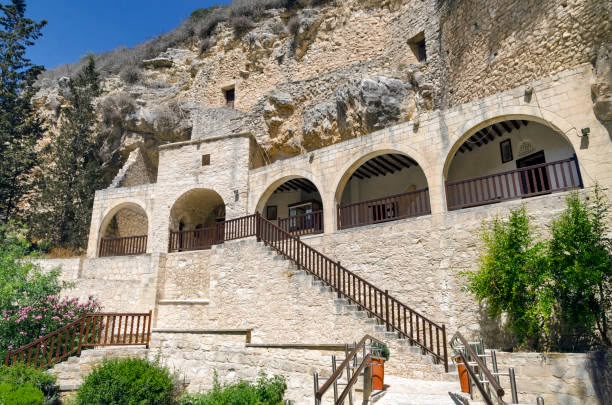
“Unable to continue his intended journey, he left the port and wandered inland, where he found water, rock and a cave.”
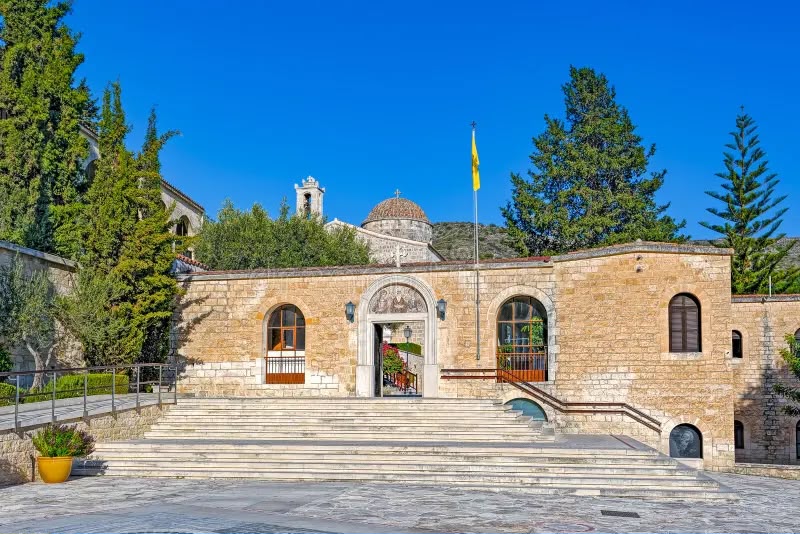
There, the story changed.
“He left Paphos not knowing where to go. Then, by chance, although we call it providence as Christians, he discovered a source of water, a well and a cave. It was quiet here and he had water. He decided to remain and try this way of life without yet knowing with certainty whether this was God’s will. He settled here in 1159, and he remained.”
ـــــــــــــــــــــــــــــــــــــــــــــــــــــــــــــــــــــــــــــــــــــــــــــــــــــــــــــــ
“We call it (chance) providence as Christians.”
ـــــــــــــــــــــــــــــــــــــــــــــــــــــــــــــــــــــــــــــــــــــــــــــــــــــــــــــــ
The place he had not been searching for became the place that defined his life, Archimandrite continued, and added that from that cave grew the hermitage, and eventually the monastic community whose presence continues in the hills of Paphos today.
But the Archimandrite sees something else in the monastery’s architecture and setting; the memory of the landscapes Saint Neophytos had experienced during his pilgrimage.
He told Anovia that Jordan’s place within Christian pilgrimage cannot be understood through tourism statistics, contemporary itineraries or destination promotion alone.
He returns to the monastery itself.
For him, Saint Neophytos is evidence of an older and deeper relationship between Cyprus and the Holy Land.
“Saint Neophytos himself is perhaps the best ambassador of this relationship. When he came here (to Paphos) and created his community, he carried with him what he had experienced in the monastic landscapes of the Jordan Valley and the Holy Land. When you look at the rocky formation and the caves, you understand that the experience remained with him. In that sense, something of the Holy Land was spiritually transferred to Cyprus.”
The connection is important because pilgrimage historically did not end with the pilgrim’s return, rather the journey travelled home with him.
As Archimandrite Neophytos explains, the influence of pilgrimage could extend beyond personal memory; to be reflected in architecture, liturgy, monastic discipline, prayer and the organisation of religious communities.
In this sense, a sacred landscape encountered through pilgrimage could leave traces in another place, shaping its spiritual language and practice.
Saint Neophytos’s Cyprus was therefore not spiritually isolated from the communities of the Holy Land; it belonged to a wider Eastern Christian world in which monks, pilgrims, texts and traditions circulated continually.
“The relationship of Cypriot Christianity with the Holy Land is unbreakable,”Archimandrite Neophytos describes that relationship in unequivocal terms
Cyprus occupies an important place in early Christian history. Paphos itself, a coastal city on the southwestern corner of Cyprus, is associated with the apostolic mission of Paul and Barnabas, while Christianity developed deep roots on the island from the earliest centuries of the Church.
ـــــــــــــــــــــــــــــــــــــــــــــــــــــــــــــــــــــــــــــــــــــــــــــــــــــــــــــــ
“Yet when speaking about Cyprus religiously, Archimandrite Neophytos continually brings the discussion back to the Holy Land.“
ـــــــــــــــــــــــــــــــــــــــــــــــــــــــــــــــــــــــــــــــــــــــــــــــــــــــــــــــ
Yet when speaking about Cyprus religiously, Archimandrite Neophytos continually brings the discussion back to the Holy Land
For generations, he explains, Cypriot Christianity looked towards its monastic and spiritual traditions.
“For long periods of our history, we were students of the monastic achievements and spirituality of the Holy Land. Cypriot Christianity was influenced by its holy men, its theological achievements and the organisation of monastic life. Even the ritual order of many monasteries was influenced by traditions connected with Saint Sabas. There was a continuous spiritual relationship; Cyprus did not develop its Christian identity in isolation from this wider world.”
Pilgrimage consequently became woven into Cypriot religious culture.
He told Anovia that journeying to the places connected with the life of Jesus Christ was far more than a religious visit, and that for many Cypriot families, it represented a profound spiritual achievement and, in some cases, the pilgrimage of a lifetime.
He then turned from history to a deeply personal memory recalling his own mother.
“I remember even my mother, for her, going there (the Holy Land) and being baptised in the Jordan River was an extraordinary spiritual achievement. She returned having prepared even things connected with the end of her life and funeral. That tells you how profoundly people understood pilgrimage. To be baptised where Christ was baptised was, in her eyes, among the highest spiritual experiences a Christian could receive.”
Reflecting on this personal memory, he told Anovia that pilgrimage goes far beyond history and religious institutions to become part of family memory, faith and the deeply personal relationship believers have with sacred places.
Thus, the Jordan River is not merely a geographical site, but a place of profound spiritual meaning.
For Christians, its significance is inseparable from the biblical account of Christ’s baptism by John the Baptist and from the Christian understanding of baptism, revelation, renewal and the beginning of Christ’s public ministry.
“It is not symbolic only. We always look forward, in a spiritual sense, to baptism and renewal. Spiritual strength is discovered and expressed through acts of faith. Therefore, the Jordan River, the baptism of Christ and everything connected with that landscape continue to possess profound meaning. Jordan, and everything Jordan represents within this sacred geography, remains extremely important in Christian consciousness,” said the Archimandrite.
Christian pilgrimage is more than visiting the locations where biblical events took place; it is also about encountering the physical setting in which sacred history unfolded, therefore, landscape, becomes part of the religious experience and historical understanding, a point of particular relevance to Jordan, he said.
He added that Jordan is sometimes treated internationally as adjacent to the Holy Land narrative rather than as an integral part of it, yet some of Christianity’s central biblical events belong directly to its geography.
The Baptism Site at Bethany Beyond the Jordan is only the clearest example.
The wider Jordanian landscape includes Mount Nebo, Madaba, Mukawir, Mafraq, Aqaba and a remarkable concentration of early Christian churches, mosaics, monasteries and archaeological remains.
Perhaps surprisingly, Archimandrite Neophytos himself has never visited Jordan.
“Never,” he says simply.
But there is no hesitation when asked whether he would like to.
“I look forward to it.”
His understanding of Jordan has been shaped by Christian history, pilgrimage traditions, and the country’s reputation for hospitality and stability.
Looking ahead to a journey he has yet to make, he told Anovia that “I would encourage every good Cypriot pilgrim to incorporate a pilgrimage to Jordan into his life in the coming years. Jordan contains what a pilgrim seeks rom ancient history, to extraordinary places like Petra, and most importantly its Christian sacred sites. We also hear about the hospitality of the Jordanian people, and feeling safe and welcomed is extremely important to any pilgrim.”
Nearly nine centuries later, Saint Neophytos’s journey still speaks to the essence of pilgrimage knowing that sacred places matter not only for where they lead us, but for what we carry back from them. From Paphos to the Jordan River, that journey continues to resonate.