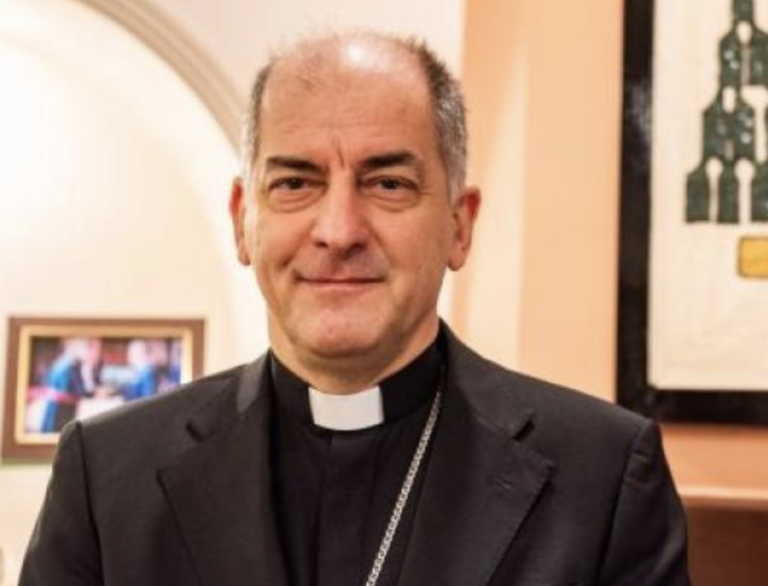
An Exclusive interview with Vatican Ambassador to Jordan Archbishop Giovanni Pietro Dal Toso
By Rula Samain
In the quiet geography of faith, certain landscapes carry a spiritual weight that transcends borders and centuries and Jordan is one of those places where biblical memory is not confined to scripture but inscribed across mountains, valleys, and ancient cities. From the waters of Bethany Beyond the Jordan, where Christians believe Jesus Christ was baptized, to Mount Nebo, where Moses gazed upon the Promised Land, the Kingdom stands as an essential chapter in the story of Christianity.
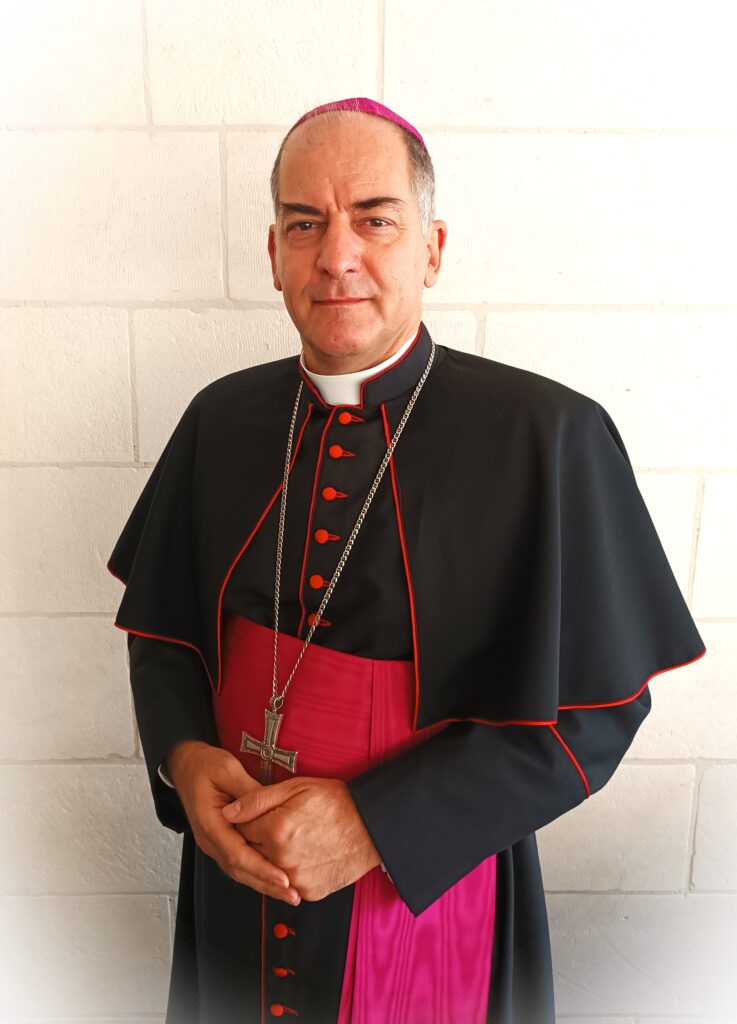
Yet, as Archbishop Giovanni Pietro Dal Toso, the Apostolic Nuncio to Jordan, explains in a recent interview with Anovia, Jordan’s place within the Holy Land remains a narrative still unfolding for the global Christian conscience.
For the Vatican ambassador, the starting point is clear; Jordan must be understood as an integral part of the Holy Land itself.
“It is very important to stress that Jordan is part of the Holy Land,” he says, adding that “from a religious perspective, this allows us to situate the country (the Kingdom) within the correct spiritual and historical context.”
The reason, he explains, is rooted in the biblical events that unfolded across Jordan’s landscape, where the Old and New Testaments both carry events and traces of this geography.
“Prophet Elijah, traditionally believed to have been born and have ascended (taken up to heaven alive in a chariot of fire) in this land, the Baptism site of Jesus Christ at Bethany Beyond the Jordan, and Mount Nebo where Prophet Moses stood at the threshold of the Promised Land.
But the Kingdom’s sacred significance does not end with these well-known sites.
The Archbishop points to spiritual significance of Umm Qais a place of striking natural beauty overlooking the Sea of Galilee, remembered in Christian tradition as the setting of one of Jesus’s many miracles.
“Such places,” he notes, “remind visitors that the biblical narrative unfolded across a broad and interconnected region, one that includes Jordan as a central stage.”
Beyond its biblical resonance, Jordan holds another layer of significance mainly the story of the early Church itself.
According to early Christian writers, the Ambassador said, the city of Pella (also known as Tabaqat Fahil in northwest Jordan) served as a refuge for the first Christian community after persecutions in Jerusalem, which places Jordan within the formative years of Christianity, when early believers sought sanctuary and began to establish new centers of faith.
Archaeology continues to confirm that history.
Across Jordan’s towns and landscapes, intricate Byzantine mosaics bear witness to the vitality of early Christian communities where churches flourished in this part of the Holy Land leaving artistic and architectural traces that offer scholars and pilgrims alike a glimpse into the development of Christianity in its earliest centuries.
“The many mosaics found across Jordan testify that early Christian churches were strongly established here. These mosaics are clear evidence of the vitality of the early Christian communities. So Jordan is not only important from a biblical perspective. It is also crucial for understanding the history of the Church and the development of the earliest Christian communities,” The Archbishop explains.
Yet transforming historical depth into meaningful contemporary pilgrimage requires careful stewardship.
For the Vatican ambassador, pilgrimage must remain above all a spiritual journey, an experience that invites reflection and rediscovery of the Christian faith.
He notes with appreciation, the efforts made by Jordanian authorities to train local guides in biblical knowledge so that visits to sacred sites extend beyond historical description into spiritual interpretation.
“I see encouraging efforts in this direction, and I believe this is a very good way to proceed.”
In parallel, Church institutions are encouraging pilgrimage organizers in Europe and the Western world to ensure that groups are accompanied by priests or individuals trained in theology and biblical studies, the ambassador said, adding that such measures, help preserve the true essence of pilgrimage.
A significant opportunity to deepen that narrative is approaching.
The year 2030 will mark two thousand years since the baptism of Jesus Christ, an anniversary that Jordanian government is already preparing to commemorate.
“In 2030 we will commemorate two thousand years since the baptism of our Lord Jesus Christ. This is a remarkable opportunity to make Jordan more widely known as a place of pilgrimage.”
Recent initiatives reflect growing momentum. Among them was the Vatican exhibition held in Rome last year under the title “Jordan: Dawn of Christianity”, for Apostolic Nuncio, such efforts signal an increasing awareness within Jordan of the importance of promoting its religious heritage.
At the same time, he observes that awareness of Jordan as a tourism destination is already strong in Europe and across the Western world, but the challenge now, he reflected, is to ensure that pilgrimage, the spiritual dimension of travel, receives equal emphasis.
One promising concept, the Apostolic Nuncio suggests, would be the development of a complete biblical itinerary within Jordan itself; a structured pilgrimage that traces the Old Testament, the New Testament, and the early life of the Church through the Kingdom’s diverse sacred sites.
“Many pilgrims who travel to the Holy Land do not automatically extend their stay in Jordan, and in some cases they simply pass through,” he observed, adding that Jordan possesses a remarkable concentration of sites linked to both the Old and New Testaments, as well as to the early life of the Church.
“Developing a full biblical pilgrimage week in Jordan would allow visitors to experience the scriptural narrative in a more complete and coherent way, moving through the landscape where these events unfolded.”
Such an approach, he noted, would allow pilgrims to experience Jordan not merely as a brief extension of Holy Land visits, but as a coherent spiritual journey in its own right.
Pilgrimage, however, carries significance beyond the experience of the traveler.
For the Archbishop, it also strengthens the bond between local Christian communities and the wider global Church.
“When pilgrims come,” he says, “it helps Christians here in Jordan and in the Middle East feel the presence and the proximity of Christians from other parts of the world. They feel they belong to a bigger body, the Universal Church.”
The encounter, in other words, is mutual. Visitors rediscover the roots of their faith, while local communities experience the solidarity of a global spiritual family.
“In this broader vision, religious tourism becomes more than an economic or cultural activity, but a form of human exchange, one that can contribute to stability and understanding in a region often defined by its complexities.”
Dal Toso believes that initiatives combining theological reflection, archaeological scholarship, and responsible media storytelling can play an important role in shaping this narrative.
Such efforts, he suggests, allow sacred geography to be understood not only through academic study or devotional practice, but also through shared cultural dialogue.
Ultimately, the value of pilgrimage lies in its ability to bring people closer to history, to faith, and to one another.
“And we should not forget another important dimension,” the Vatican ambassador reflects, “such exchanges can contribute to building a more peaceful order in the Middle East because when people know one another better, it becomes easier to live together.”
In addition, he added that the presence of pilgrims and visitors in Jordan and the Holy Land can also contribute to the advancement of humanity; a deeper understanding between cultures and communities.
In that sense, Jordan’s sacred landscape offers more than a destination for pilgrims, but a meeting point, between past and present, between scholarship and faith, and perhaps most importantly, between cultures seeking a more peaceful future.